From an early age, I learned to adapt myself to the expectations and perceptions of others. In an effort to make a good impression, I often concealed my true self, prioritizing the wishes of others over my own emotions, particularly in response to my family’s expectations. As these experiences accumulated, I developed ways of protecting myself through polite smiles, positive words, and, at times, silence rather than openly expressing my feelings. What began as a passive response gradually became a means of self-protection—a form of concealment.
Through these experiences, two aspects of myself came to coexist: the “visible self,” which seeks to meet the expectations of others, and the “true self,” which holds my thoughts and emotions beneath the surface. The visible self allows me to establish relationships with the outside world and respond to social expectations, while the true self preserves my inner identity and individuality. I came to recognize that these two selves are not necessarily in opposition, and that finding a balance between them is essential to maintaining my sense of self.
These personal experiences also reflect the psychological conflicts shared by many people in contemporary society. We often shape our outward appearances in response to the perceptions and judgments of others, striving to maintain a positive image while inwardly longing to be understood for who we truly are. This tension becomes particularly apparent in environments such as social media, where outward appearances and public perceptions are emphasized. In my work, the “protective barrier” symbolizes both the act of concealing and protecting oneself from the outside world and the underlying desire to communicate with others.
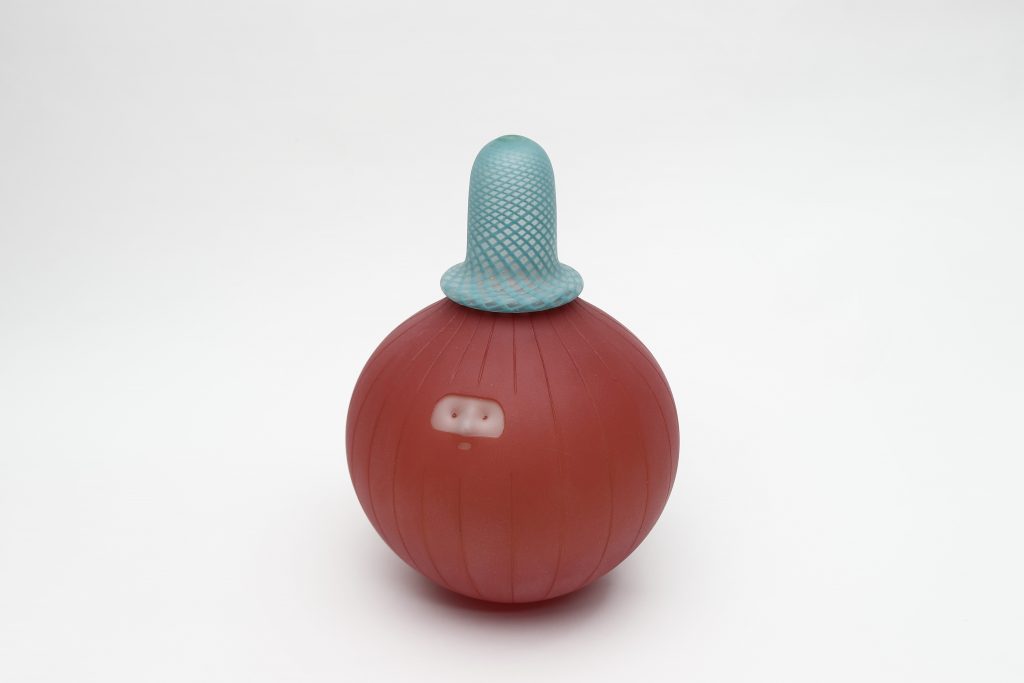
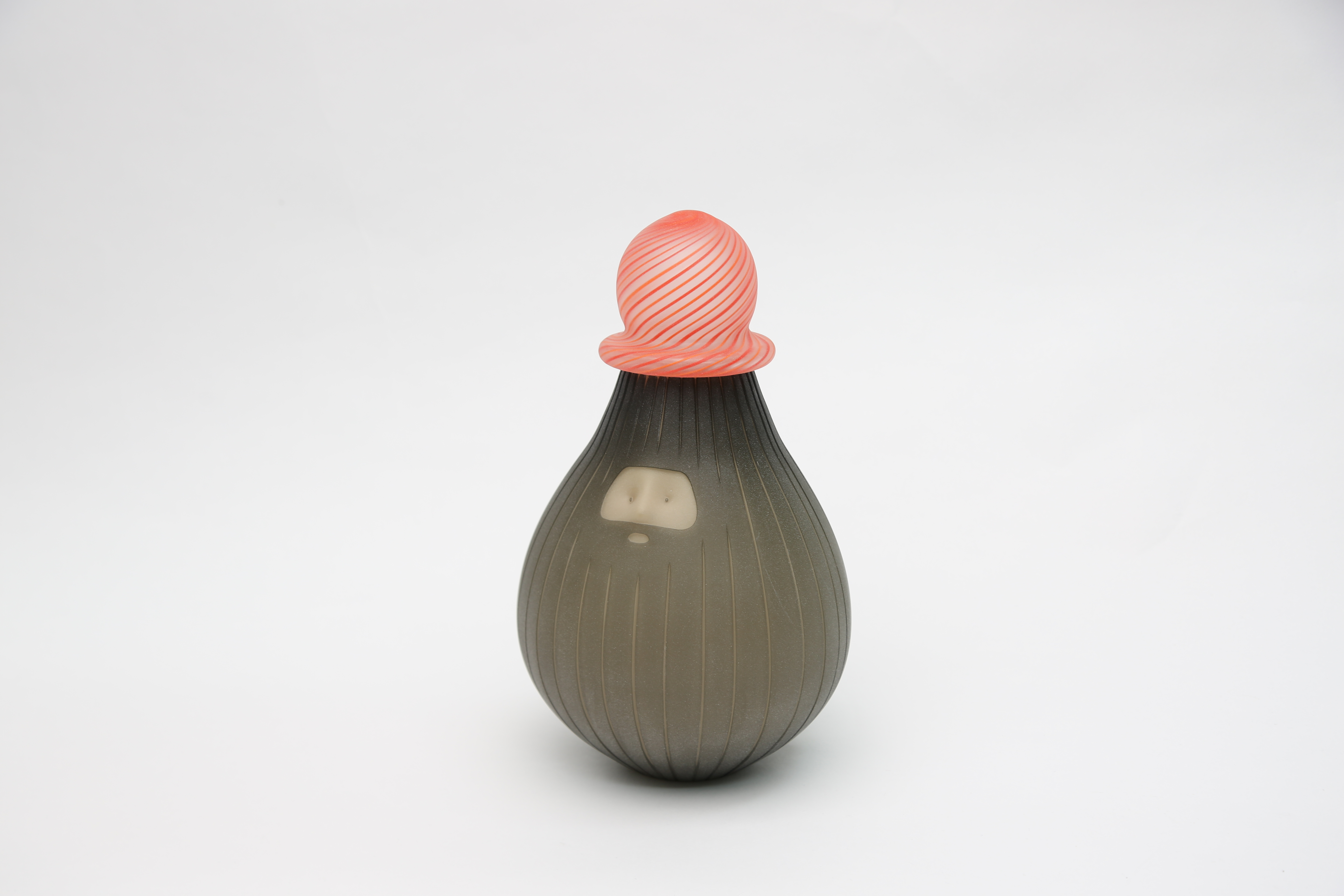
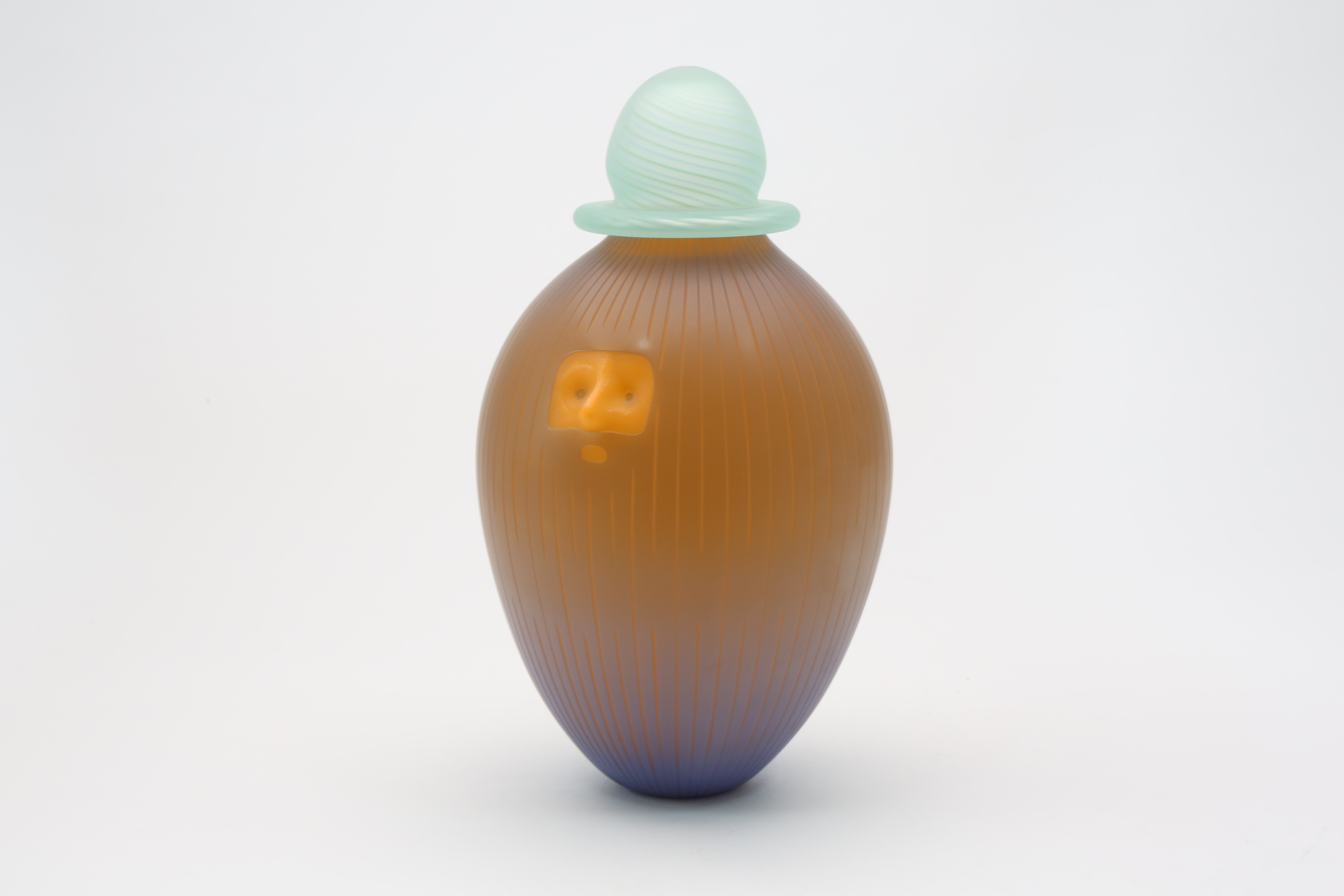
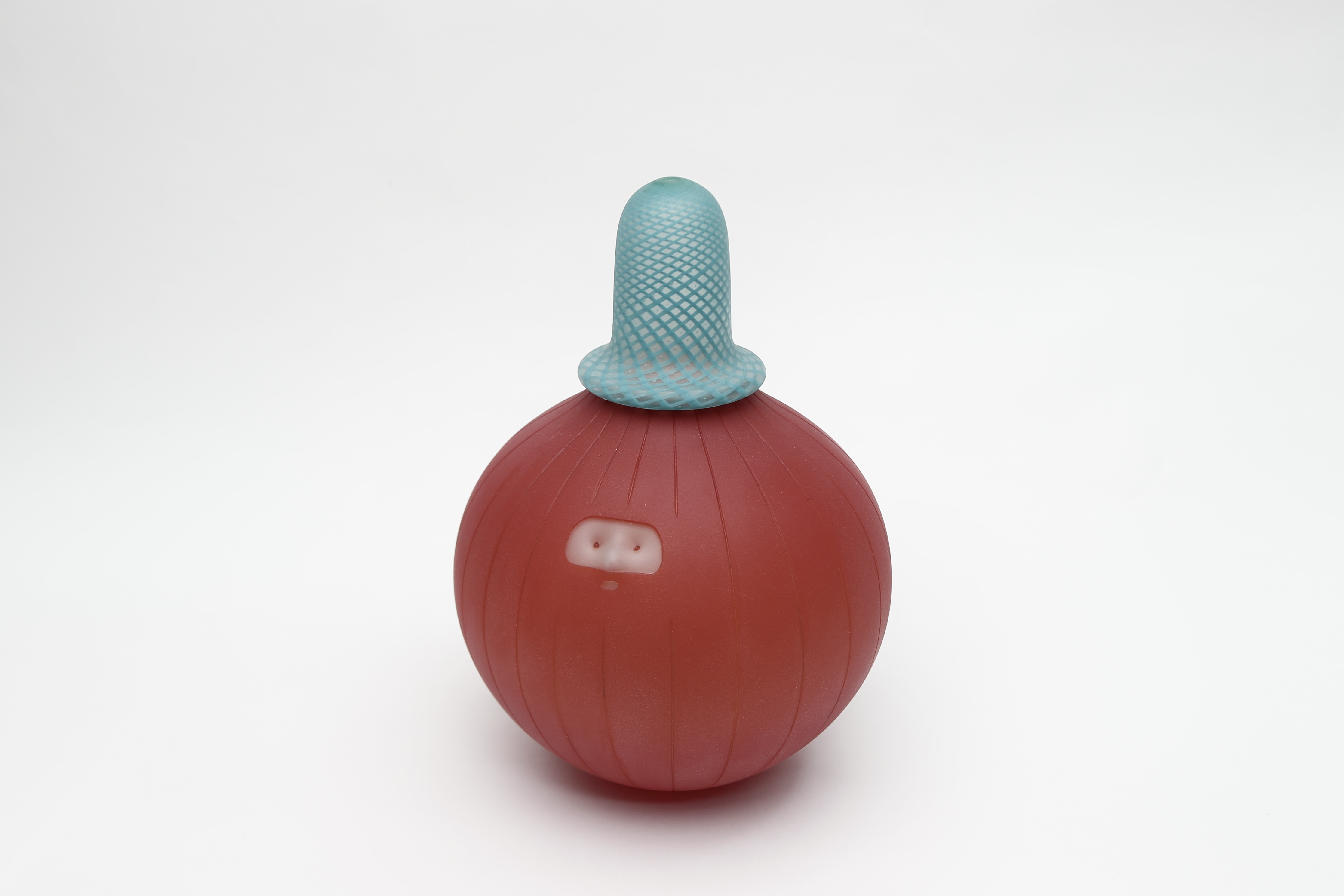
The characters in my work have faces largely concealed by beards and wear hats decorated with vibrant colors and patterns. These beards and hats are not merely decorative elements but visual representations of the “visible self” constructed as a means of protection. The contrast between the beard that conceals the small face and the elaborate hat that attracts attention embodies the conflicting desire to remain hidden while simultaneously wishing to be seen.
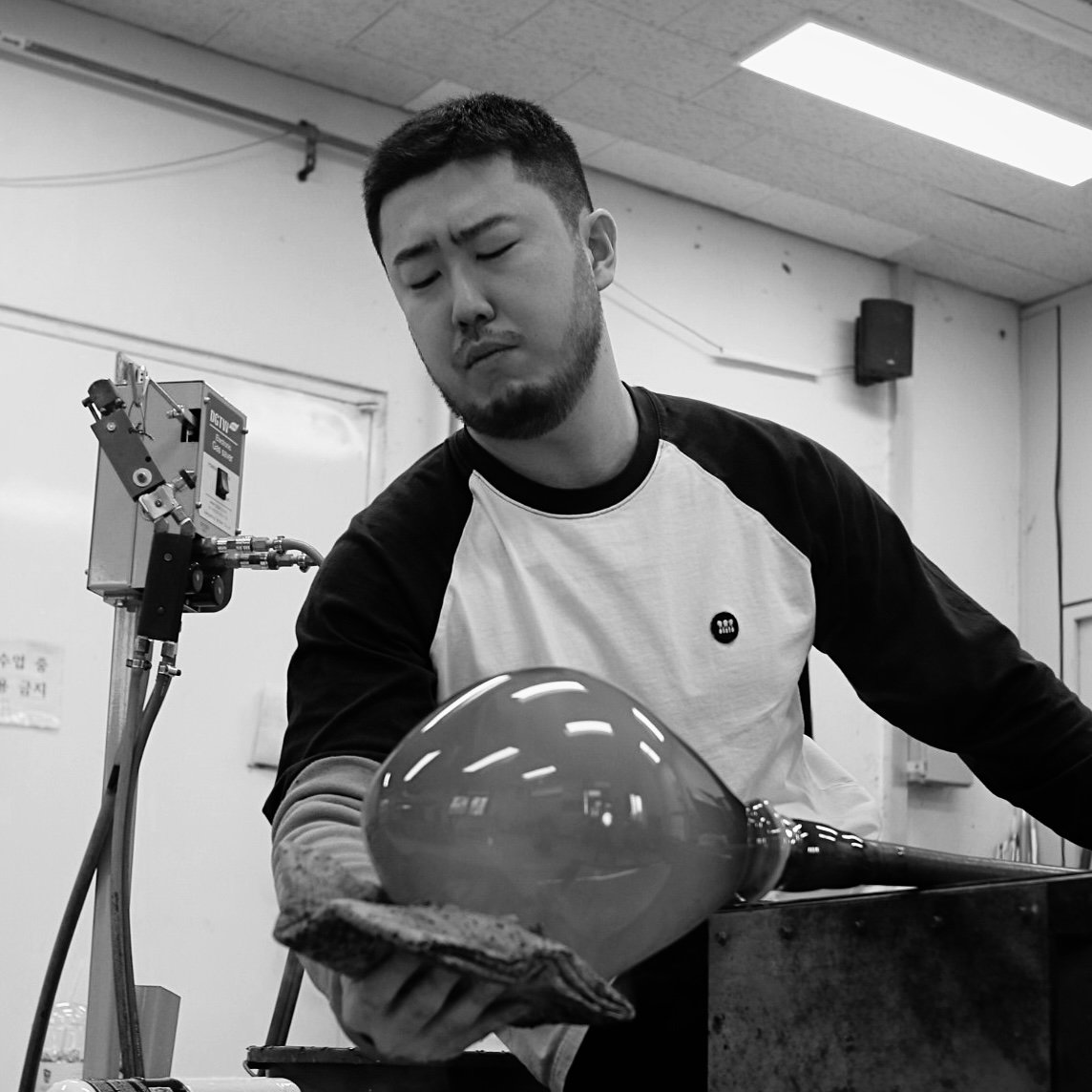
My works are created using glassblowing, coldworking, and sandblasting techniques. The hats are made primarily through the cane technique, in which colored glass is encased in clear glass and drawn into long, thin rods to create various colors and striped patterns. For the bodies, I use the stuff cup technique to incorporate different colors on the interior and exterior surfaces of the glass. The facial forms are then developed through sandblasting, while patterns are engraved into the glass surface through coldworking.
Beyond my personal experiences, these works reflect the lives of people in contemporary society who conceal themselves under the gaze of others while longing for meaningful communication. The protective barrier is not simply a means of separation from the outside world; it can also serve as a way to protect oneself while remaining connected to others. Through my work, I hope to encourage reflection on the balance between self-protection and communication, offering viewers an opportunity to reconsider their inner selves and their relationships with others.